



Motiva Preservé: A Less Invasive Approach to Breast Augmentation in Richmond, VA
Plenty of people want fuller, more balanced breasts but stall on one worry: how much of the surgery, the recovery, and the change to their own body are they actually signing up for? That hesitation is fair. Motiva Preservé® is a newer breast augmentation technique built around that exact concern, and Dr. Gregory T. Lynam now offers it at Richmond Surgical Arts.
Preservé isn’t a different implant so much as a different way of getting the implant where it needs to go. Where a traditional breast augmentation often involves cutting through tissue to make the implant pocket, Preservé is designed to ease that tissue aside instead, with the goal of preserving more of your natural breast. A consultation is still the only way to know if it fits your anatomy and your goals. But here’s what it actually involves.
What is Motiva Preservé?
Motiva Preservé® is a less invasive breast augmentation technique, compared with traditional augmentation, that’s designed to protect the structures of your breast while still placing an implant. It uses two patented Motiva® tools to create the implant pocket gently rather than by cutting.
The idea is to keep more of what’s already yours intact. The technique is designed to preserve your:
- natural breast tissue
- nipple sensation
- chest muscle function
- and to work through a smaller incision than many traditional approaches use
None of that is a guarantee of a specific result. It’s what the technique aims for, and how close any one patient gets depends on their anatomy and how they heal.
How the Preservé technique works
Preservé is built around a small incision in the inframammary fold (the crease under the breast) and a step-by-step approach meant to spare tissue. Here’s the gist.
First, Dr. Lynam takes detailed measurements of your breast so the plan and the implant are matched to your anatomy. After numbing the area, he makes a small incision and uses the Motiva® Channel Separator to create a tunnel to the implant space without cutting through the tissue. Next, the Motiva® Inflatable Balloon gradually eases your tissue aside to form a pocket sized to the implant. Finally, the implant goes into that pocket, with the technique designed to keep your tissue, nipple sensation, and chest muscles intact.
It’s often done with minimal anesthesia and is designed for a faster recovery than a standard augmentation. “Designed for” is the key phrase there. Your real recovery depends on you.
What’s actually available in the US
In the US, the piece that’s cleared is the tissue preservation system itself. The Motiva® Channel Separator and the Inflatable Balloon are registered with the FDA and used together with FDA-approved Motiva implants. At Richmond Surgical Arts, that means Preservé is performed with FDA-approved Motiva SmoothSilk® implants, including the SmoothSilk Ergonomix®, which is designed to shift shape as you move (rounder lying down, more teardrop standing up). The safety and effectiveness of Motiva SmoothSilk implants have been studied in the FDA clinical trial data.

Who’s a good candidate?
Preservé is aimed at people having a primary breast augmentation (your first one), or a primary augmentation combined with a lift, also called an augmentation mastopexy. If you’ve already had implants and need a revision, that’s usually a different conversation.
In general, good candidates are:
- healthy, with no active infection
- at or above the FDA age indication for these silicone implants, which is 22 and older
- not pregnant or nursing
- realistic about what an implant can and can’t do
Breast implant surgery isn’t recommended for women with an active infection anywhere in the body, or with untreated breast cancer or pre-cancer. A consultation with Dr. Lynam is how you find out whether Preservé, a traditional augmentation, or a breast lift with implants makes the most sense for you. Many patients also use 3D imaging during the consult to preview size and shape before deciding.
What patients tend to like about it
Worth repeating though: these are the aims of the technique, not promises. Bodies heal differently, and results vary.
Recovery and what to expect
Follow-up visits matter. Implants need monitoring over time, and those check-ins are part of doing this right.
Risks and things to weigh
One thing a lot of people don’t hear clearly enough: breast implants aren’t lifetime devices. At some point most implants need monitoring, and some need to be replaced. Going in with that understanding is part of making a good decision.
Why patients choose Dr. Lynam in Richmond
Dr. Gregory T. Lynam is Richmond’s only board-certified plastic and maxillofacial surgeon, and he’s spent years doing breast surgery for patients across the Richmond area, including Midlothian, Short Pump, Glen Allen, Henrico, Chester, and Mechanicsville. Adding Preservé to the practice gives patients a tissue-preserving option from a surgeon who’ll tell you honestly whether it’s the right call.
You can read more about Dr. Lynam, browse the breast augmentation gallery, or look into financing if you’re weighing the cost.
Frequently asked questions
How is Motiva Preservé different from a traditional breast augmentation?
Is Motiva Preservé FDA-approved in the US?
How long is recovery?
Can Preservé be combined with a breast lift?
Will I have a scar?
How long do the implants last?
How do I know if I'm a candidate?
About Dr. Gregory T. Lynam
Dr. Gregory T. Lynam is Richmond’s only board-certified plastic and maxillofacial surgeon. He has helped many people in the community with breast surgery, reconstruction, tumor surgery, and facial trauma surgery. He was voted one of Richmond’s “Top Docs” in plastic surgery by Richmond Magazine and has been recognized among the Top 100 Doctors on RealSelf. More about Dr. Lynam.
Ready to ask whether Motiva Preservé is right for you? Call Richmond Surgical Arts at 804-560-5260 or request a consultation. You’ll get a straight answer.
Richmond Surgical Arts, 8720 Stony Point Parkway, Suite 100, Richmond, VA 23235
RSA BLOG
Stay updated regarding our offers, procedures and events

Motiva Preservé: A Less Invasive Breast Augmentation Now at Richmond Surgical Arts
Dr. Lynam is now offering Motiva Preservé®, and it's worth a few minutes to explain what it is. Because it's a genuinely different way to approach breast augmentation, not just a new name on an old procedure. Here's the short version. Most breast augmentations create...

Motiva Preserve Breast Augmentation: The Next Generation of Natural Breast Enhancement
Motiva Preserve breast augmentation represents a modern approach to breast enhancement focused on minimally invasive technique, tissue preservation, and natural-looking results. Built around Motiva’s advanced implant technology, this approach is designed to enhance...
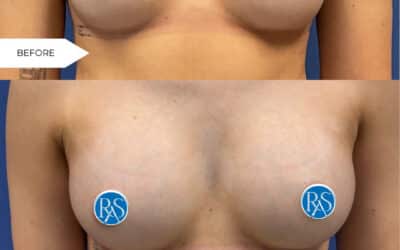
The beauty of a ballerina breast augmentation is in the balance
There's a real elegance to a breast augmentation done with restraint. Not bigger for the sake of bigger. Just soft, balanced, and in proportion with the rest of you. That's the whole spirit of a ballerina breast augmentation, and it's one of the most elegant looks Dr....