



SkinPen
Microneedling is your new best friend when it comes to combatting the appearance of facial acne scars. Ask for SkinPen® by name to get the impressive results demonstrated by our clinical study and the safety of the first FDA-cleared device.
Here’s what you can expect from a SkinPen treatment:
- A plan for optimal results. Your physician may recommend a course of procedures based on your individual goals. Maintenance of your procedure might require multiple treatments.
- A comfortable procedure. Based on your needs, your physician will likely apply a topical numbing agent to the treatment area.
- A short procedure time. The treatment will likely take about 30 minutes.
- A mild sensation. Most patients report feeling only the slight vibration of SkinPen during the procedure.
- Minimal post-procedure effects. The skin will appear slightly pink to red immediately post-procedure, similar to a mild to moderate sunburn. Additionally, the most common treatment responses experienced were dryness, rough skin, tightness, redness, itching, peeling, discomfort, tenderness, and burning. These conditions resolved over time without any further complications. Please see atient labeling for detailed safety information.
- Soothing aftercare. Your clinician will provide Skinfuse® LIFT, a clean, non-cytotoxic hydrogel used to prevent the skin from drying out post-treatment.
- An effective post-procedure protocol. Your provider might recommend an aftercare regimen. Ask about Skinfuse, Bellus Medical’s 90-day protocol specifically formulated to support your skin following microneedling.
BEFORE AND (HAPPILY EVER) AFTER
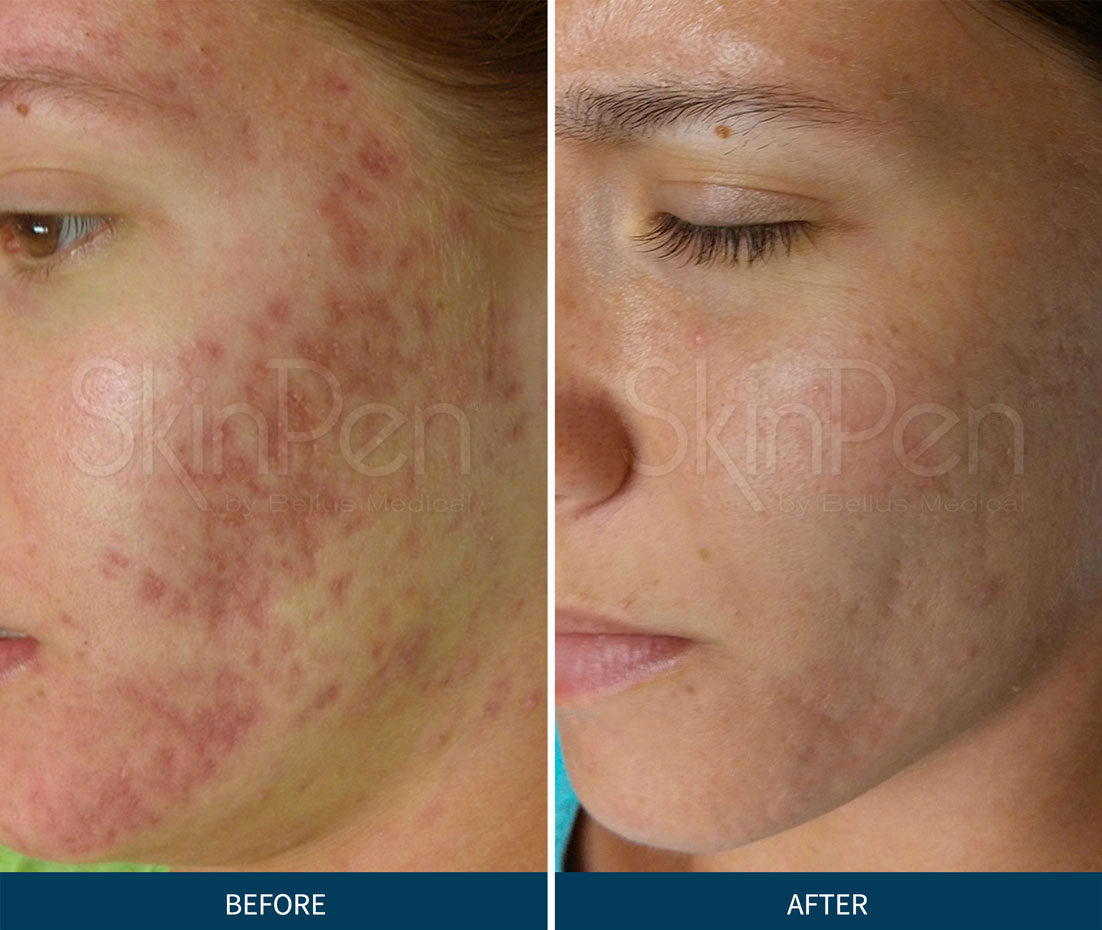
WHAT IS SKINPEN?
With as few as three non-invasive and affordable treatments spaced 30 days apart, you can improve your appearance for six months after your last treatment – and step out with confidence.

HOW MICRONEEDLING WORKS
SkinPen by Bellus Medical is the first FDA-cleared microneedling device.
It causes controlled micro-injuries that stimulate your body’s natural wound healing process, while minimizing cellular damage. The result is effective remodeling of scar tissue, while keeping the overall structure of the skin intact.
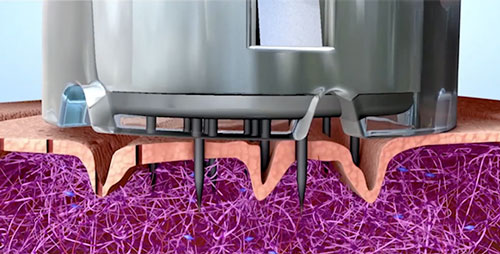
There are three phases to the wound-repair process:
- Phase I: Inflammation. Piercing the skin triggers your immune system to disinfect the wounds, remove debris, increase blood flow and begin to create new tissue.
- Phase II: Proliferation. The wound is rebuilt with new granulation cells, which are part of the extracellular matrix. Additionally, a new network of blood vessels develops.
- Phase III: Remodeling. The wound is replaced with new dermal tissues and blood vessels.
Best of all, SkinPen works. Ninety percent of subjects in the clinical trial would recommend the procedure to family and friends.
Skin Care Resources
Our most popular articles and info on Skin Care
https://richmondsurgicalarts.com/new-service-skinpen-prp/
Your Skin Deserves an Expert Touch | Richmond Surgical Arts
https://richmondsurgicalarts.com/skin-deserves-expert-touch/
https://richmondsurgicalarts.com/rsa-announces-new-skin-rejuvenation-center/
RSA BLOG
Stay updated regarding our offers, procedures and events

5 Ways Lasers Improve Skin Texture Beyond Wrinkles
When most people think of laser treatments, they think of smoothing fine lines and softening wrinkles. But today’s advanced laser technology does far more than treat aging. Lasers can dramatically improve overall skin texture, tone, clarity, and health—often with...

Can You Build Collagen After 40? Yes — Here’s How
As we enter our 40s, natural collagen production begins to slow—leading to fine lines, sagging skin, hollowing, and diminished elasticity. But here’s the good news: you can rebuild collagen after 40, and today’s advanced non-surgical treatments make it easier than...

Sculptra vs Filler: Which Is Better for Cheek Volume?
When it comes to restoring youthful cheek volume, two popular injectable options often come up: Sculptra and dermal fillers (like Juvéderm or Restylane). While both can enhance facial contours, they work very differently — and understanding those differences can help...