Losing 100 pounds is a massive achievement. But for a lot of people, it’s only half the story.
There’s a version of the weight loss journey that doesn’t get talked about enough. You put in the work, months or years of it, and you get to the other side having genuinely transformed your health. And then you look in the mirror and the skin is still there. Loose, excess skin that no amount of exercise is going to change, because that’s just not how skin works after significant weight loss. It doesn’t snap back. Not after 100 pounds.
That’s exactly where one of Dr. Lynam’s patients found herself. And her experience, from that frustration to surgery to what it felt like to open her closet afterward, is worth reading before you make any decisions about your own path.
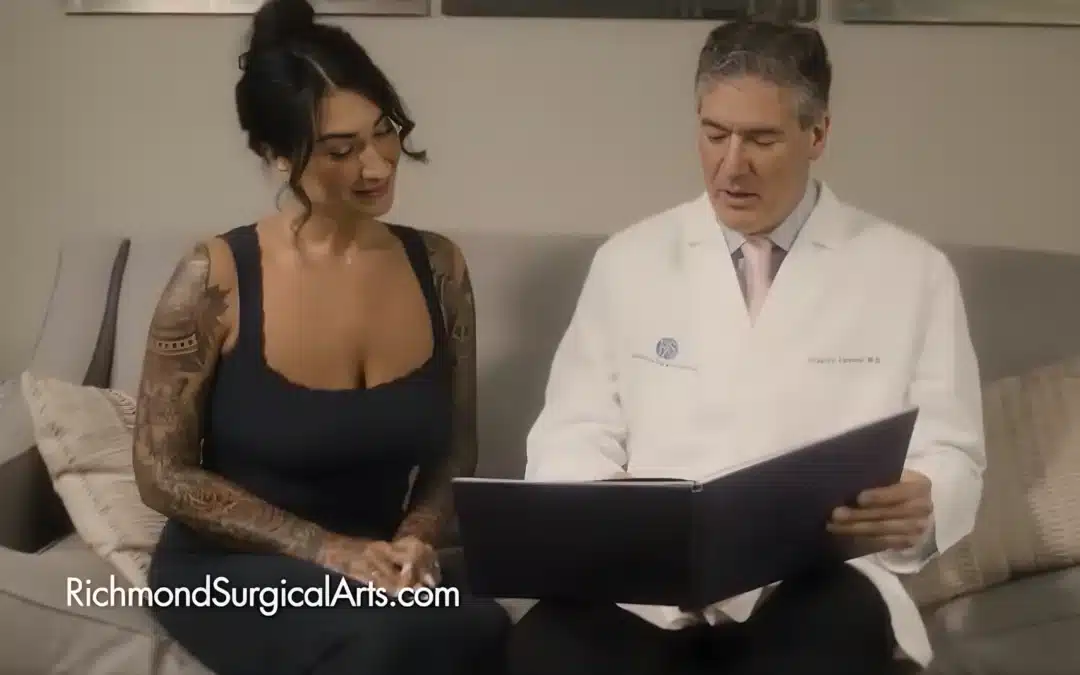
Real Patient Story: Post-Weight Loss Body Contouring at Richmond Surgical Arts
Watch her full story here:
She put it simply: “I have lost 100 lbs and no matter how hard I worked out, I just knew that the gym was not going to get rid of all the loose skin.”
That sentence is going to resonate with a lot of people in the Richmond area who’ve been through significant weight loss, whether from diet and exercise, bariatric surgery, or GLP-1 medications like semaglutide. The physical effort is real. The results are real. But loose skin is a separate issue, and it’s one that surgery is genuinely designed to address in a way that the gym simply can’t.
She had a combination procedure: a butt lift, lateral thigh lift, and tummy tuck all performed together. That kind of combined approach to post-weight loss body contouring is sometimes called a lower body lift, and it addresses the areas where loose skin tends to concentrate most after major weight loss: the abdomen, flanks, outer thighs, and buttocks. Doing them together in a single surgical session means one recovery instead of several, though it also means a more involved surgery and a longer healing process. That tradeoff is something Dr. Lynam discusses with patients individually during the consultation.
As for choosing Dr. Lynam specifically, she said it was straightforward. “Between the reviews and the before and after pictures, Dr. Lynam was an easy choice.” That’s a decision-making process a lot of Richmond patients describe: doing the research, looking at real results from real procedures, and arriving at a level of confidence before ever walking through the door. You can see before and after photos from Dr. Lynam’s patients directly on the Richmond Surgical Arts website.
What she described after surgery is the part that tends to stick with people. “After surgery, I can go in my closet and put anything on. Just feeling truly like myself for the first time.” And then: “It is the best thing I’ve ever done for myself.”
That’s not a small thing to say after 100 pounds of hard work. It means the surgery completed something that the weight loss alone couldn’t finish.
What Is Post-Weight Loss Body Contouring, Exactly?
Post-weight loss body contouring is a category of surgical procedures designed to remove excess skin and reshape the body after significant weight loss. When someone loses a large amount of weight, typically 50 pounds or more, the skin that stretched during weight gain often can’t retract fully on its own. The result is folds or draping of loose skin, most commonly around the abdomen, thighs, arms, and buttocks.
Exercise can improve muscle tone underneath, but it doesn’t address the skin itself. That’s a physiological reality, not a motivational failure. The only way to remove excess skin is surgically.
Common procedures in this category include:
Tummy tuck (abdominoplasty). A tummy tuck removes excess skin and tightens the abdominal wall. It’s one of the most commonly requested post-weight loss procedures and addresses the apron of skin that often remains below the belly button after significant loss.
Lateral thigh lift. This targets the outer thighs, removing loose skin along the sides and improving contour from hip to knee. It’s often combined with other lower body procedures for a more consistent result across the lower half.
Butt lift (lower body lift). A butt lift reshapes the buttocks by removing skin from the lower back and upper buttock region. After major weight loss, the area often appears flat or deflated, and this procedure addresses both the excess skin and the shape.
These procedures can be done separately or in combination, depending on the patient’s goals, health, and how much correction is needed. Combined procedures mean more surgery at once, which carries more considerations for recovery and surgical planning. But they also mean going under anesthesia once instead of multiple times, and a single coordinated recovery period. Most surgeons have different opinions on this, but in practice the patients who are good candidates for combined procedures often prefer it once they understand the tradeoff clearly.
What the Research Says
A 2023 study published in Plastic and Reconstructive Surgery (Poulsen et al., PubMed PMID 36728585) followed over 1,500 patients through their full weight loss journey and found that body contouring surgery produced the highest quality-of-life and appearance satisfaction scores of any stage in the process, including after bariatric surgery alone. The authors specifically noted that body contouring helps patients maintain those improvements long-term.
Separately, a systematic review and meta-analysis (PubMed PMID 30069862) found that body contouring surgery after massive weight loss produced statistically significant improvements in physical functioning, psychological wellbeing, and social functioning. These aren’t soft outcomes. They’re measurable differences in how people live day to day.
And a separate study on patient expectations (PubMed PMID 22101887) found that 96% of massive weight loss patients developed excess skin that caused real functional problems, things like difficulty with physical activity, skin irritation, and trouble finding clothing that fits. The gym doesn’t solve these. Surgery does.
What to Expect During the Consultation Process
The consultation at Richmond Surgical Arts is where most of this gets figured out. Dr. Lynam reviews your medical history, discusses what you’re hoping to achieve, and looks at your current anatomy to determine what’s realistic and what combination of procedures makes the most sense for your body specifically. You can schedule a consultation here, or call the office directly at (804) 560-5260.
For post-weight loss patients, a few additional factors tend to come up. Weight stability is one of them. Surgeons typically want patients to be at or near their goal weight and maintaining it before proceeding, because significant weight changes after surgery can affect results. Dr. Lynam has mentioned in his own patient education materials that he prefers patients to be within about 10 to 15 pounds of their goal weight before a tummy tuck, for instance. Overall health is another consideration, particularly for patients who’ve undergone bariatric surgery or have nutritional factors to account for.
None of that is meant to discourage anyone. It’s just part of building a realistic plan. The consultation is where you find out where you stand and what the right timing looks like.
If you’ve recently lost weight through GLP-1 medications like Ozempic or Wegovy, Richmond Surgical Arts has specific guidance for that too. Their post on surgery after GLP-1 weight loss is worth reading before your consultation, since medication timing and nutritional status can affect surgical planning.
Dr. Lynam’s Background and Why It Matters for These Procedures
Dr. Gregory T. Lynam is double board-certified in both plastic surgery and oral and maxillofacial surgery. He trained at the Medical College of Virginia and completed an additional cosmetic surgery fellowship in Texas before establishing Richmond Surgical Arts in 2003. The dual training matters for body contouring procedures, particularly combined lower body lifts, because they require a high level of surgical planning and an eye for proportionality across the whole figure.
He’s been recognized by Richmond Magazine as one of the area’s top plastic surgeons and has been listed among RealSelf’s Top 100 Doctors. Those are external recognitions, not self-assessments, which makes them worth noting.
But probably more telling is the consistent thread in patient reviews: people mention specific nurses by name, describe feeling genuinely cared for during recovery, and talk about Dr. Lynam taking time to explain things rather than rushing through appointments. For a surgery that involves this level of physical and emotional investment, that matters a lot more than most people expect going in.
Most procedures at Richmond Surgical Arts are performed at Stony Point Surgery Center, a fully accredited outpatient facility directly across the street from Dr. Lynam’s office at 8720 Stony Point Parkway. That setup makes follow-up appointments and pre-op visits a lot more manageable for patients coming from Chesterfield, Midlothian, Henrico, or elsewhere in the Richmond metro.
Recovery: What Post-Weight Loss Body Contouring Actually Involves
Recovery from a circumferential body lift or combined lower body procedure is more significant than single-procedure recovery. Most patients need several weeks before returning to normal activity, and full results take time to develop as swelling resolves, typically several months, sometimes longer. Results can vary based on skin quality, age, and individual healing.
That’s not said to scare anyone off. It’s said because patients who go in with realistic expectations about recovery tend to do better, psychologically and physically, than patients who expect to bounce back in two weeks.
Dr. Lynam’s team provides detailed post-op instructions and is reachable during recovery. The fact that the surgery center is across the street from the office makes follow-up appointments and quick check-ins far more accessible than at practices where the office and surgical facility are across town from each other.
Frequently Asked Questions
Who is a good candidate for post-weight loss body contouring?
Generally, candidates are people who have lost a significant amount of weight, often 50 pounds or more, and have been maintaining a stable weight for at least several months. Good overall health, non-smoking status, and realistic expectations about outcomes are also factors. Dr. Lynam reviews all of this during the consultation and can give a much clearer picture based on your specific situation.
Can a tummy tuck, thigh lift, and butt lift really be done at the same time?
Yes, in appropriate candidates. Combined lower body contouring procedures are performed as a single surgical session, which means one anesthesia experience and one recovery period. Whether someone is a good candidate for a combined approach depends on their health, the extent of correction needed, and surgical planning. It’s not the right call for everyone, but for many post-weight loss patients it’s a reasonable option. More detail is on the post-weight loss body contouring page.
How long does recovery take after a lower body lift?
Recovery varies. Most patients need two to four weeks before returning to desk work or light activity. More physical jobs or exercise typically require six weeks or more. Full results, including resolution of swelling, can take six months to a year. Dr. Lynam’s team will walk you through a specific timeline based on your procedure.
Will insurance cover post-weight loss body contouring surgery?
In most cases, no. These procedures are considered cosmetic and are not covered by health insurance. There are occasional exceptions when excess skin causes documented medical problems like chronic skin infections, but coverage is not common. Richmond Surgical Arts does offer financing options, which the surgical coordinator can walk you through during your appointment.
How do I know if I’m at the right weight before surgery?
Most surgeons recommend being at or near your goal weight and maintaining it for at least three to six months before body contouring surgery. Continuing to lose weight after surgery can affect your results. Dr. Lynam addresses this specifically during consultations for post-weight loss patients, and his guidance on weight stability is part of how he tailors the surgical plan to each person.
What makes Richmond Surgical Arts a good choice for body contouring in Richmond, VA?
Dr. Lynam’s dual board certifications, his experience with complex combined procedures, and the consistent patient feedback about the quality of care throughout the process are probably the most concrete answers. The before and after gallery on their website gives a realistic picture of results from actual patients. And the physical setup of the practice, with the surgery center right across the street, makes the whole process easier to manage.
How do I schedule a consultation at Richmond Surgical Arts?
Call (804) 560-5260 or visit richmondsurgicalarts.com to request an appointment. The office is at 8720 Stony Point Parkway, Suite 100, Richmond, VA 23235. Access is via Chippenham Parkway to Stony Point Parkway.
Research References
- Poulsen L, et al. “Body Contouring Surgery Improves Long-Term Satisfaction with Appearance and Health-Related Quality of Life after Bariatric Surgery.” Plastic and Reconstructive Surgery. 2023 Jun 1;151(6):1307-1316. https://pubmed.ncbi.nlm.nih.gov/36728585/
- ElAbd R, et al. “Does Body Contouring After Bariatric Weight Loss Enhance Quality of Life? A Systematic Review of QOL Studies.” Aesthetic Plastic Surgery. 2018. https://pubmed.ncbi.nlm.nih.gov/30069862/
3. Kitzinger HB, et al. “After massive weight loss: patients’ expectations of body contouring surgery.” Obesity Surgery. 2012. https://pubmed.ncbi.nlm.nih.gov/22101887/